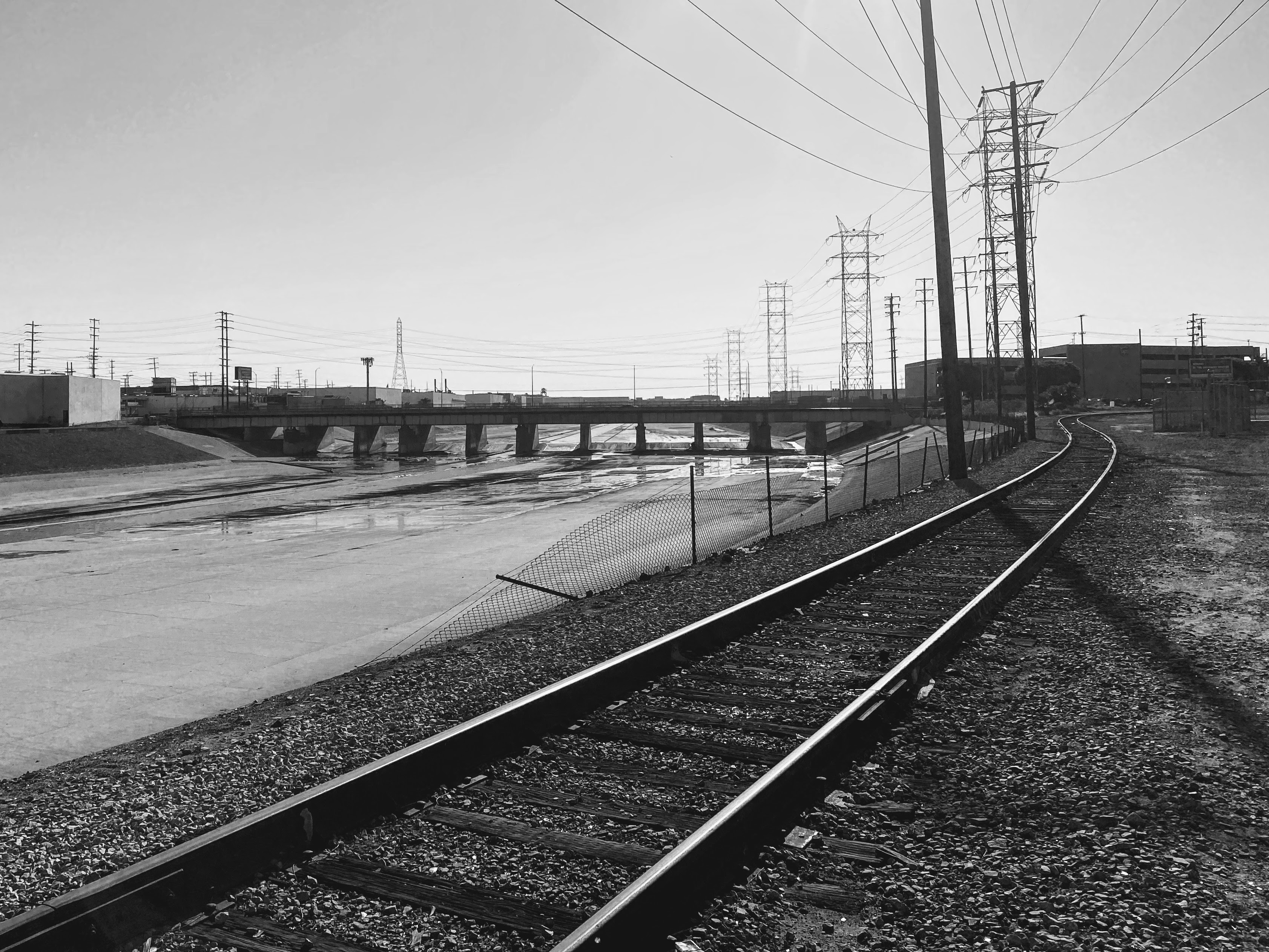
A view of the Los Angeles River from Bandini Blvd
The first thing I noticed when I stepped out of my car was the stench. It smelled like the inside of a fridge full of food left to rot at room temperature for years. But I couldn’t close the fridge door; the breeze probably carried that smell for miles. I tried to identify the source, but all I saw were endless rows of bland, nondescript industrial buildings, each of which could’ve been the culprit. Almost as strikingly, I couldn’t spot any green space, aside from the occasional nonnative street tree.
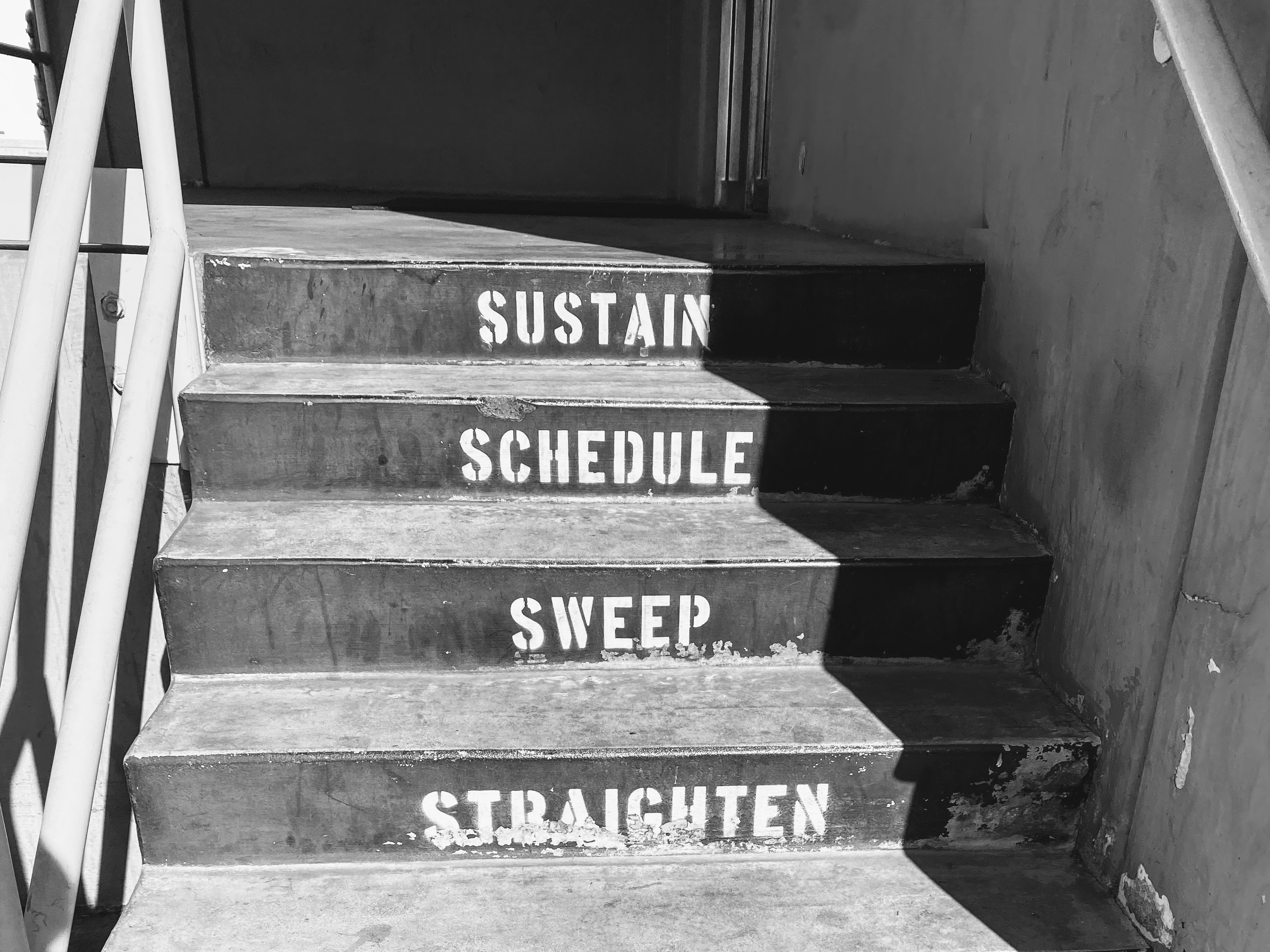
An ultra-corporate (but creative) staircase into a warehouse
I parked on Indiana St in Vernon, CA, whose Wikipedia page states that it “has no parks” and is “exclusively industrial”. Less than 250 people live here, despite being just a few miles away from downtown Los Angeles. I walked down the street to the abandoned Exide battery plant, crossing abandoned train tracks and passing by an exceedingly corporate staircase to a different warehouse. From a distance, the Exide plant didn’t look distinct from neighboring buildings. I got closer and I saw darkened windows, boarded-up doors, and ominous signs warning passers-by not to enter the building. The company took down the “Exide” sign above the entryway, but I saw traces of it. After taking my pictures, I walked a few more feet to a large fence surrounding the building. This fence had signs posted every fifty feet or so warning about an active cleanup site and threatening trespassers with arrest.
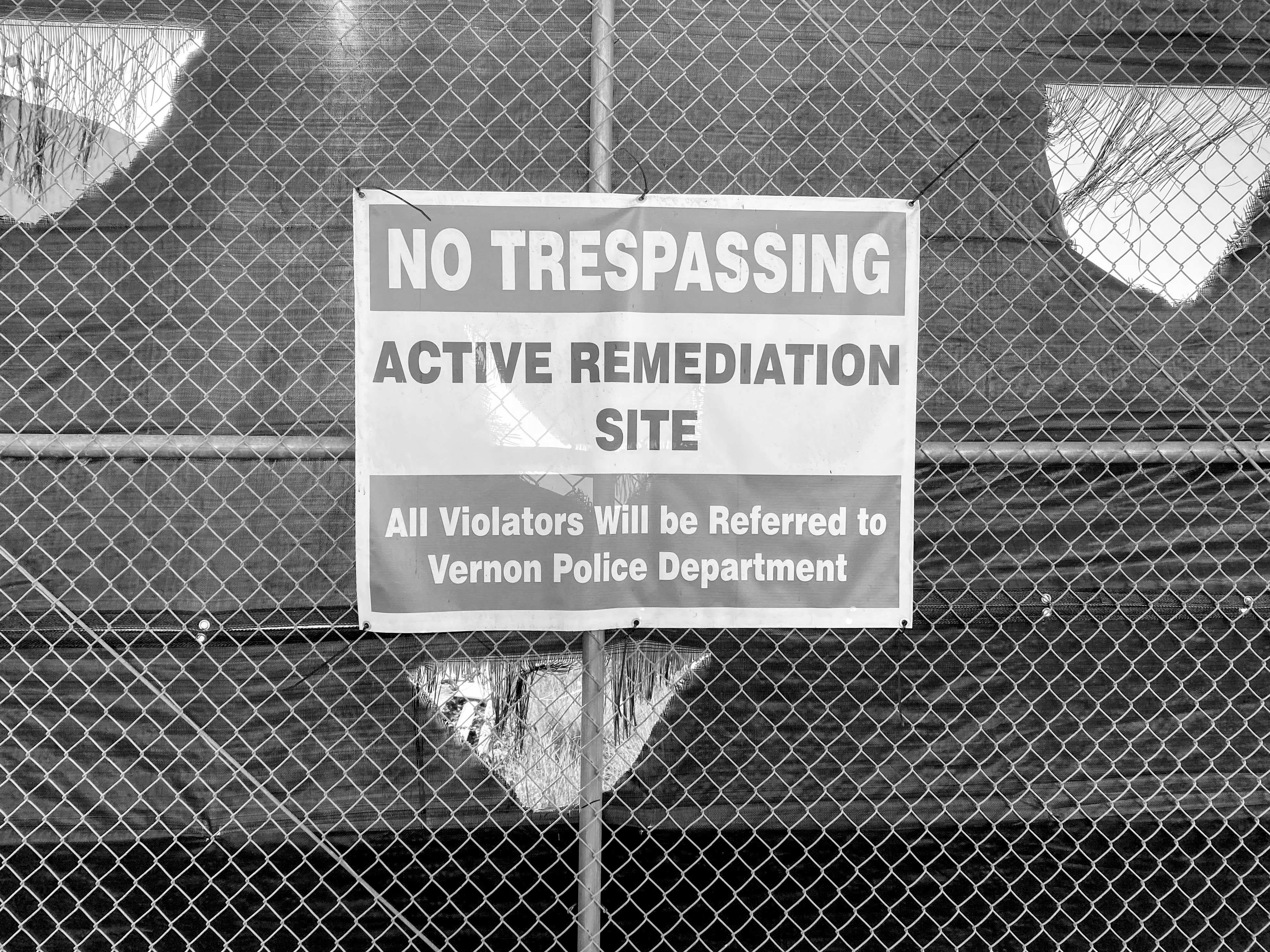
An intimidating sign marking the Exide cleanup site
Behind this fence, the Exide battery plant once recycled lead batteries by melting them, separating their components, and isolating the lead for reuse. Many plants nearby still smelt metal; an “exclusively industrial” city seems perfect for this kind of business! I turned right onto Bandini Blvd, still paralleling the fence. Bandini Blvd is a wide road, with two lanes on either side and an inflated speed limit (which I managed to exceed anyway on my drive here). Eighteen-wheel trucks comprised nearly all of the traffic, and I was the only pedestrian. Vernon felt like an industrial haven, but it seemed to think of itself as a bubble: it served a purpose, to manufacture, and it thought its activities affected no one outside of its boundaries.
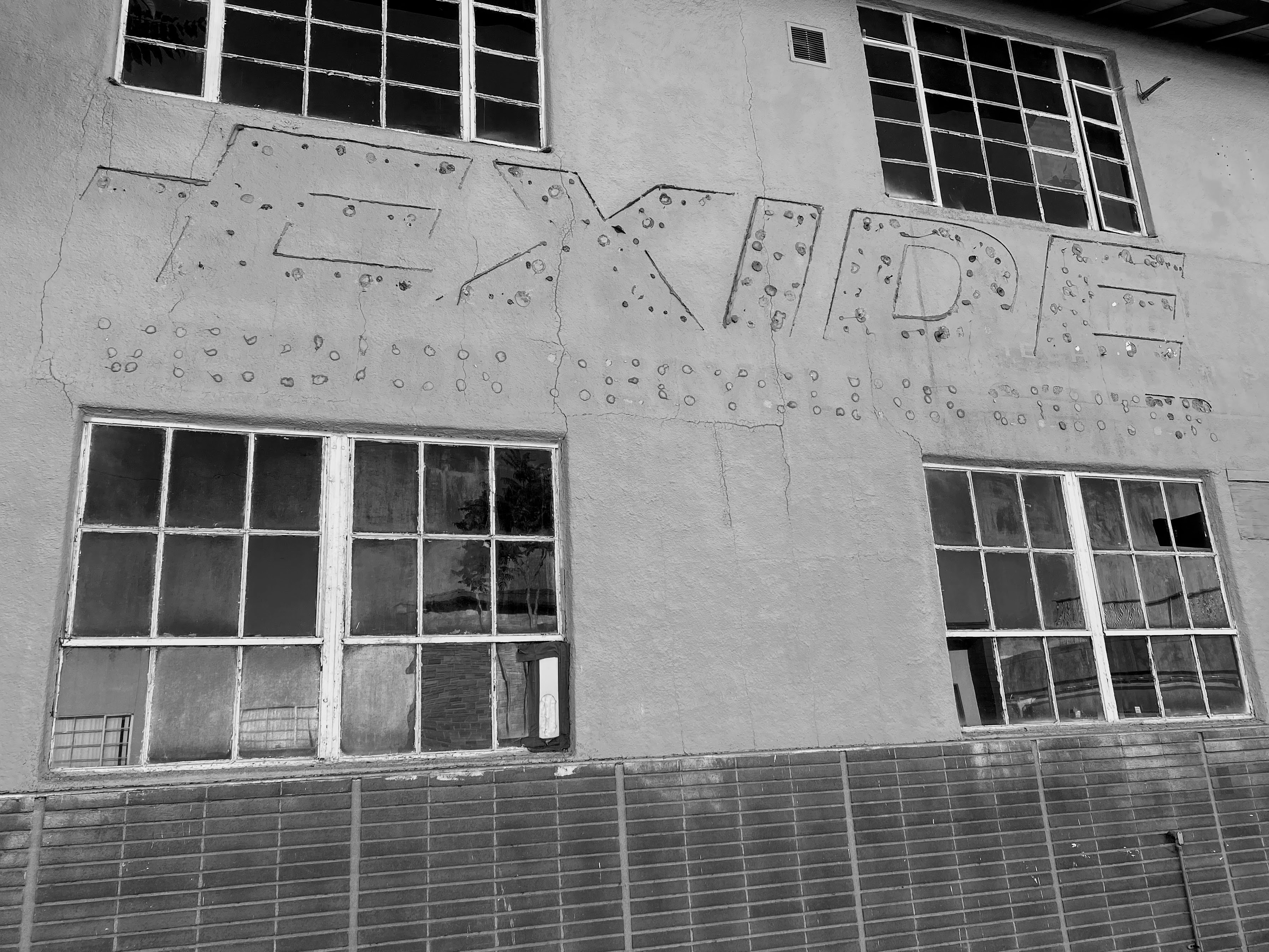
The former Exide plant in Vernon
Of course, this is false. East Los Angeles communities, such as Boyle Heights, Bandini, and Commerce, surround Vernon on all four sides, with hundreds of thousands of residents combined. And the Los Angeles River flows beside Bandini Blvd before passing through densely-populated cities (like Compton) on its way to the ocean. I walked about a half mile down the boulevard until I reached its closest point to the river, then I jaywalked across to a patch of soil between the road and the steep concrete embankment down to the unfortunate river. Any contaminants emitted into the air or soil by the nearby factories could wash into the river and flow downstream, affecting marine life and beachgoers from Huntington Beach to San Pedro. I scraped a test tube into the pallid-gray soil, avoiding bits of crushed gravel. I repeated this process two more times at sites a few feet away. When I filled the test tube, I threw it into my bag, sanitized my hands with a Clorox wipe, and jogged back to my car, retracing my footsteps down the nonexistent sidewalk.
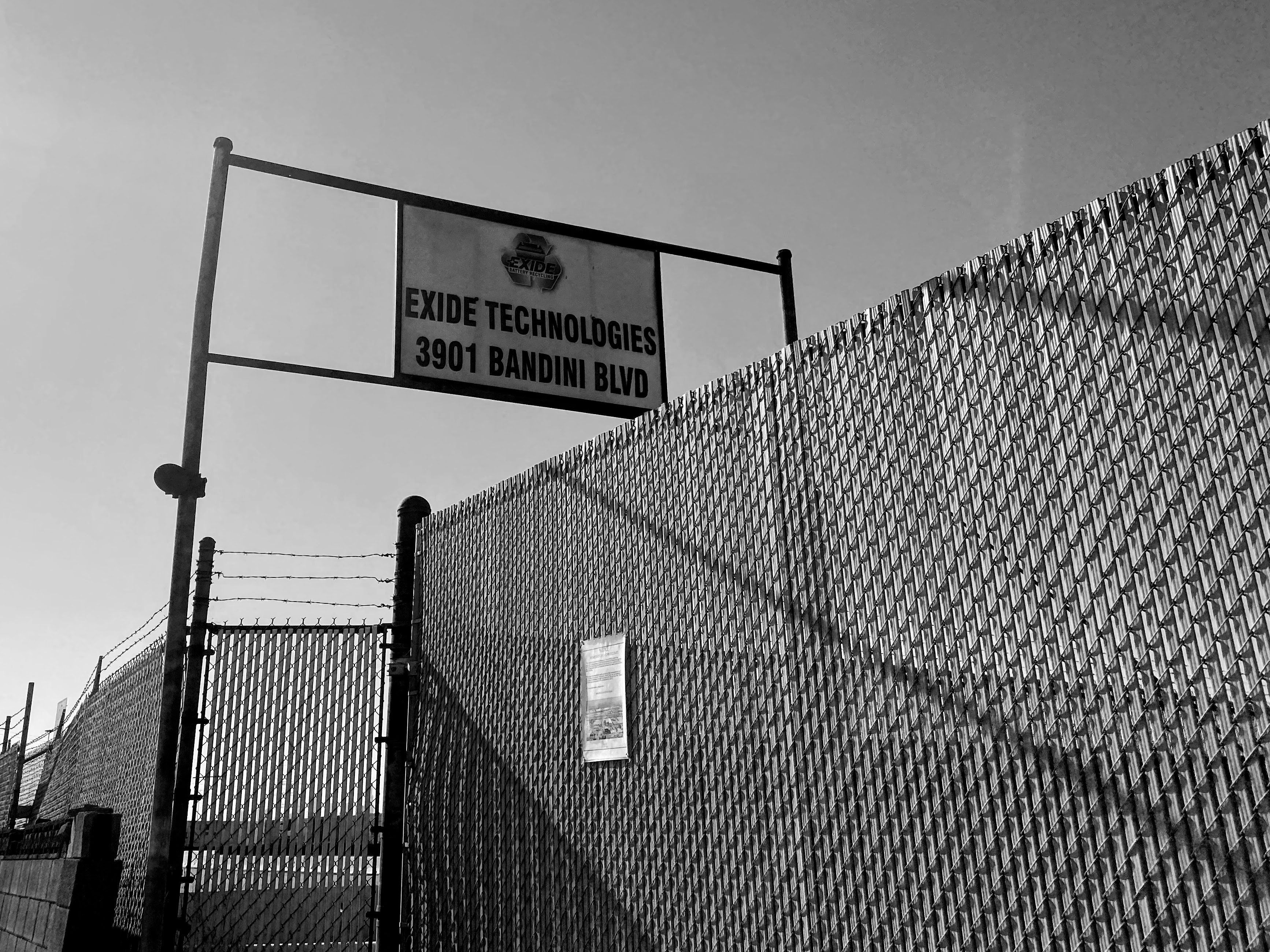
Another angle of the fenced-off plant
I drove back onto Bandini Blvd and headed east, quickly exiting the “Vernon bubble” and its associated stench. After passing under the 710 freeway, I reached a residential neighborhood called Bandini (which was off to my left) and parked my car in the parking lot of Bandini Park, a small space tucked in a corner of Bandini. The streets and homes there were no different from most suburban communities in the Los Angeles area: I saw homeowners mowing their lawns and hosting barbecues for their neighbors. But I also found dug-up front yards fenced off with corporate-looking signs and information placards. As I walked closer, these signs marked homes with ongoing lead remediation. The threat posed by Exide (and perhaps Vernon as a whole) was invisible to the outside world unless explicitly marked with a sign.
But the community members all knew: they suffered from the symptoms of lead and arsenic poisoning for decades, and when they complained, Los Angeles authorities ignored them and wrote their bodies and lives off. I passed by toddlers running around a yard, just a couple of houses away from a patch of land fenced off and dug up for remediation. I can’t imagine having to choose between mooring my developing children indoors and exposing them to elevated levels of lead. I saw slightly older children playing in the dirt beneath the 710 freeway, with the industrial buildings of Vernon visible through the underpass. I’m sure they knew about the contamination at a park wedged up against factories and a freeway. Many of their families likely fought against Exide and then the California Department of Toxic Substances Control (DTSC), the state agency responsible for managing environmental hazards.
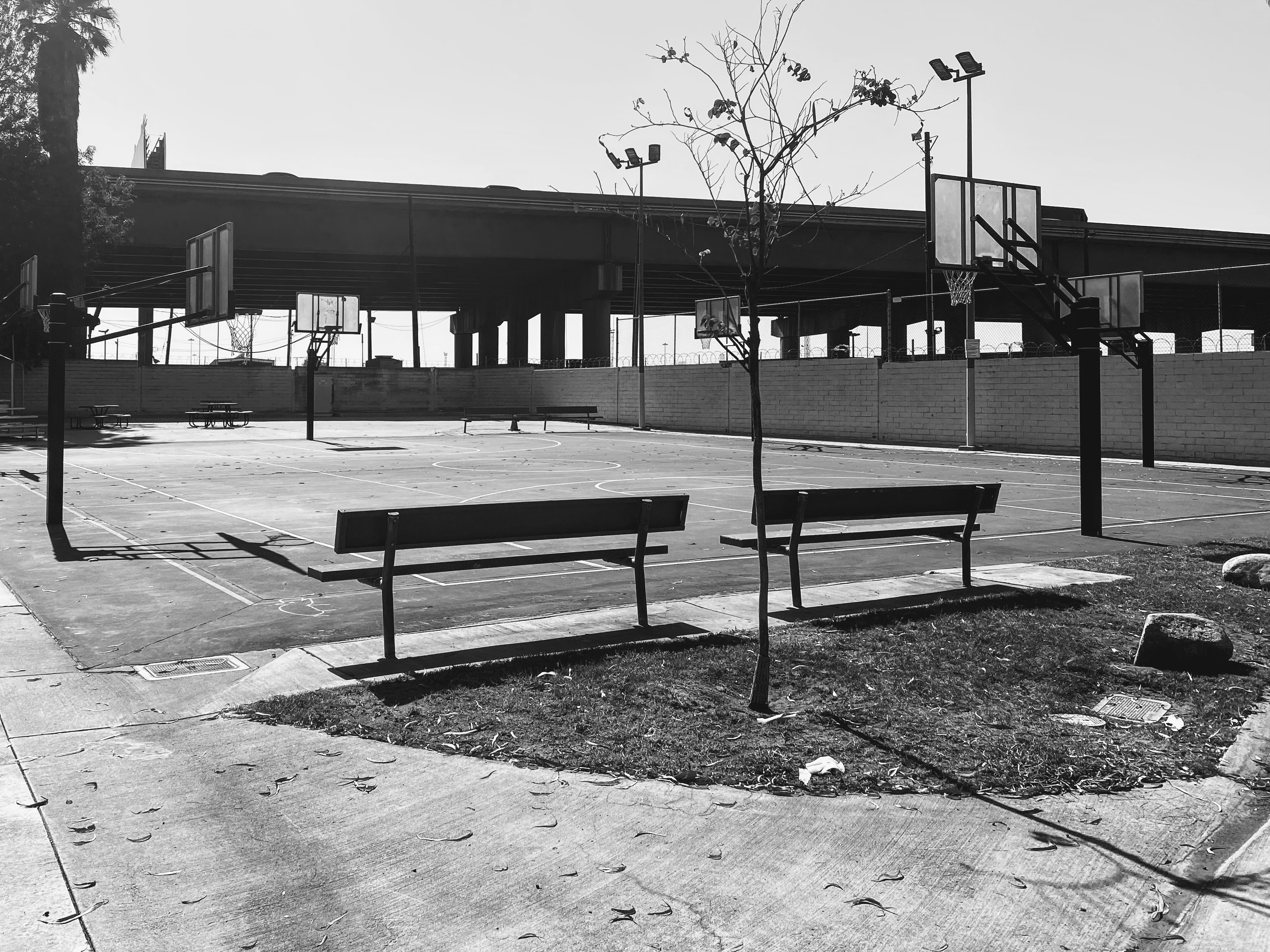
A basketball court at Bandini Park below the 710 freeway, with factories visible in the distance
This fight has been ongoing for decades. Exide, a major car battery manufacturer, ignored sustained safety violations at its Vernon plant, ostensibly to maximize its profit margin. The wind carried the lead and arsenic to nearby communities, which depended on Vernon’s plants for employment but suffered from the contamination they caused. After community members demanded change and the DTSC issued more notices of violations, Exide agreed to shut down its Vernon facility in 2015. But in 2020, Exide declared bankruptcy, and a judge ruled that the company had no financial responsibility for cleanup in neighborhoods affected by its Vernon plant. Imagine your boss or professor visiting your house, knocking all your plates from the shelves, smashing picture frames off the wall, and spilling Legos across the floor, before fleeing without cleaning up the mess. And then imagine that person being declared not liable for the damage by a judge within their corporate or institutional system.
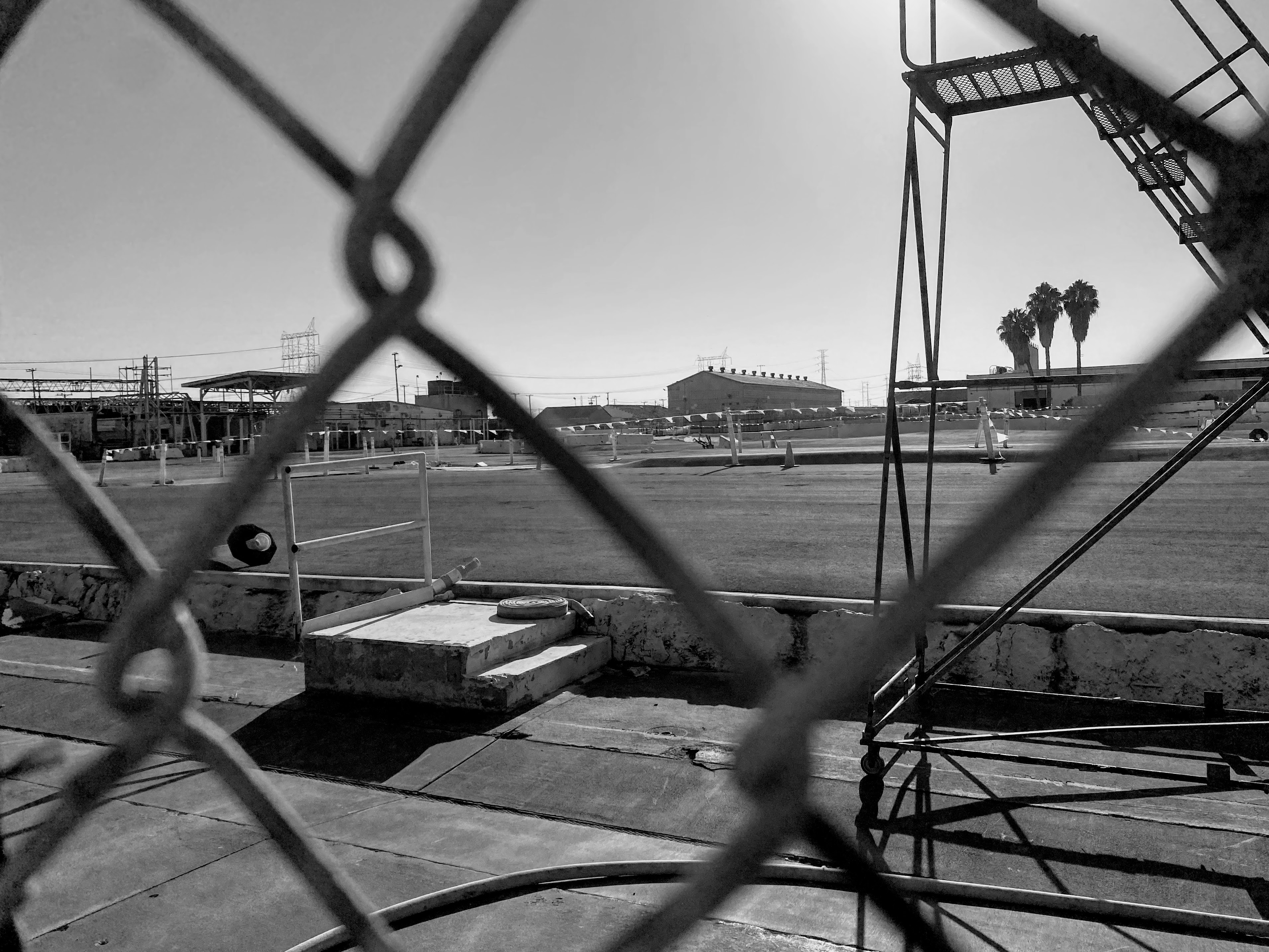
A peek into the fence surrounding the Exide cleanup site
This metaphor doesn’t quite capture what the residents of East Los Angeles experienced. Exposure to lead is far more dangerous than stepping on Legos or broken glass: it’s among the most potent neurotoxins known to us. Lead is most frequently encountered in the environment as an ion with a +2 charge. When it enters the body, it mimics calcium, which is also almost always found as a +2-charged ion. This is devastating: calcium ions play an essential role in neurotransmitter release, signal transduction, and muscle contraction. Our proteins and enzymes have no way of distinguishing a lead ion from a calcium ion, so they bind with lead. But lead is a much larger ion than calcium, so biochemical reactions where lead replaces calcium cannot proceed normally, preventing normal nervous system and muscle function. There is no safe level of lead in the body because any lead present would interfere with reactions. Furthermore, lead’s mimicry of calcium allows it to persist for decades in bones, where calcium is normally stored. There’s no easy way to remove lead from the body, especially once it’s tucked away in bones.
What does this biochemistry imply for East Los Angeles residents? They were (and continue to be) exposed to the lead Exide released into their communities. If this lead made this way into their bodies, it would remain there for decades and cause neurological symptoms. Tragically, children are affected most severely: lead interrupts neuron function when their brains are plastic and forming new connections, leading to reduced IQ, trouble focusing in class, anger management issues, and diminished fine motor skills. Lead poisons children for a lifetime; they can never turn back the clock and “redevelop” their brains in the absence of lead. This raises questions like, “how do we prepare children affected by lead poisoning for adulthood?”, “how do we compensate victims of poisoning for lost future income and opportunities?”, and even “how do we take the effects of childhood lead poisoning into account in the college admissions process?” None of these have easy answers. Residents fought hard to shut down Exide and continue to fight to speed up the cleanup process, but much of the damage has been done and is permanent. Exide destroyed the futures of countless East Los Angeles children, potentially trapping them in a cycle of intergenerational poverty.
I visited Bandini Park as a scientist: I went there, I collected a bit of soil, and I brought my sample back to the lab to analyze. But as I walked around the neighborhood and saw the children kick up dirt and the parents watching nervously, I felt powerless. I wanted to find a way to reverse the effects of lead poisoning and deliver the children a hopeful future. Or clean up all the homes and parks with more urgency and compassion than the DTSC. But I couldn’t do either of those; amassing resources and raising awareness about the injustice done to the people of Boyle Heights, Bandini, and Commerce felt like a modest (yet insufficient) first step. Whether it’s through communicating science to friends and family, organizing against offending corporations, or encouraging politicians to take action, we have to give vulnerable communities a voice in the fight for environmental justice.
The sign in front of Bandini Park
After I got back to my car, I drove a few miles northwest to Boyle Heights, the most populous of the neighborhoods affected by Exide’s actions. Like Bandini, Boyle Heights showed no visible scars of Exide’s presence, but it seemed to have internalized its wounds as wealthy politicians and bureaucrats ignored their calls for justice. I parked by the Boyle Heights Sports Park and walked down an embankment by the side of the road until I reached a convenient spot to sample soil. A group of teenagers played flag football on the field; I wanted to join in, but it would be weird to ask while carrying a bag of dirty test tubes. I tried to scrape up some soil into my test tube quickly enough to avoid attention, but a couple passing by asked me, “Is there still lead here?” I replied that I was testing for it; they thanked me for my effort and strolled away quickly.
I felt my stomach grumble, so I dropped my soil samples in my car and walked towards an area my map claimed would have some places to eat. Sure enough, I found a highly-rated taco truck with a line stretching around the block. I’m usually too impatient to deal with long lines, but motivated by the prospect of a burrito (among my favorite foods), I decided to wait. As I stood there, I realized that not one person around me was speaking in English. I parsed through all the Spanish vocabulary I knew while regretting my decision to take French for seven years. I quickly concluded that I didn’t know enough Spanish to order my food, and when it was my turn, I awkwardly began to speak in English. The man taking my order didn’t speak English, but he summoned the single English-speaking employee of the truck to translate for me. When the employee announced “veintiseis”, I jumped at the opportunity to show off some knowledge of Spanish (numbers tend not to be so difficult) and picked up my burrito. It was excellent, but I sure hope I communicated that I was vegetarian! If you’re ever in Boyle Heights, be sure to visit Tacos El Pecas (especially if you’re accompanied by a Spanish-speaking friend).
The drive back to campus from Boyle Heights took all of twenty-five minutes, but that was enough time to reflect on my experience at the taco truck. The various neighborhoods of East Los Angeles are all about 90-95% Latino, and I heard a lot more Spanish spoken than English. Despite being a few dozen miles from Claremont, I felt like a foreigner having a difficult time communicating with residents. But I was just ordering a burrito. How could the community, especially monolingual Spanish speakers, communicate that they were suffering from the health effects of lead and demand action from the government? The fate and well-being of their children were at stake, but they faced a language barrier (in addition to a socioeconomic barrier) trying to get the English-speaking, wealthy, aloof DTSC to understand what they were going through. As a result of these barriers, DTSC officials kept a distance from East Los Angeles and allocated their budget to more convenient needs. The cleanup progress remains sluggish to this day.
I’m grateful to have a Pomona education and bright prospects for the future. Just a few miles away, Exide has robbed a generation of children and young adults of their future. That shouldn’t sit well with any of us. Tell this story to a friend. Vote in every election cycle. Baby steps like these can help keep children away from lead and end a dark chapter in the history of East Los Angeles.